
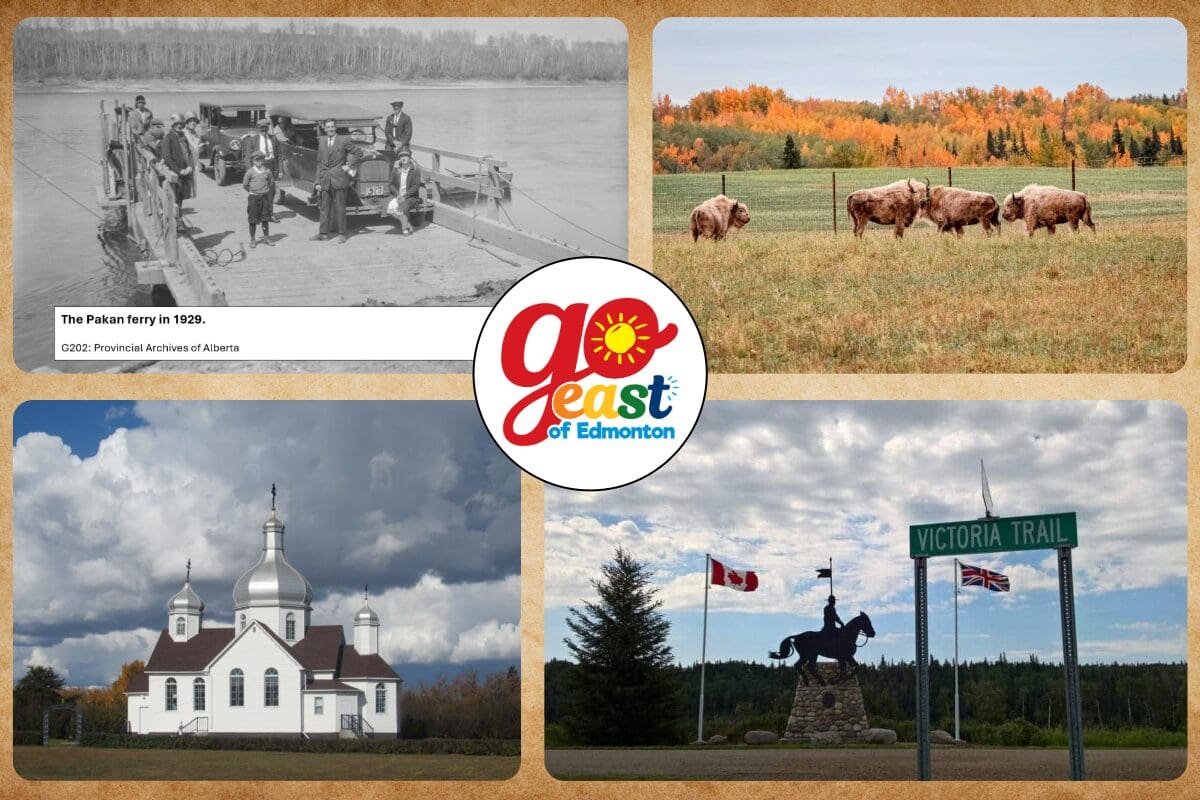
With over 20 Historical Sites and museums, visitors can discover over 100 years of history through Provincial and National Historic Sites all over Smoky Lake County. Just south of Waskatenau, near the North Saskatchewan River, is the 58 km Victoria Trail, once an Indigenous trail leading to the Victoria Settlement. The Victoria Trail & Victoria Settlement have long been a focal part of the significant sites designated across the County. Victoria Trail is actually the oldest road in Alberta that is still in use today.
From historic trails and ferry crossings to churches and museums that have stood the test of time, you can find them in Smoky Lake County. The region has plenty of culture and history to uncover, including the highlights listed below.
Victoria District National Historic Site
Located northeast of Edmonton, this expansive rural cultural landscape preserves the stories and heritage of early settlement along the historic Victoria Trail.
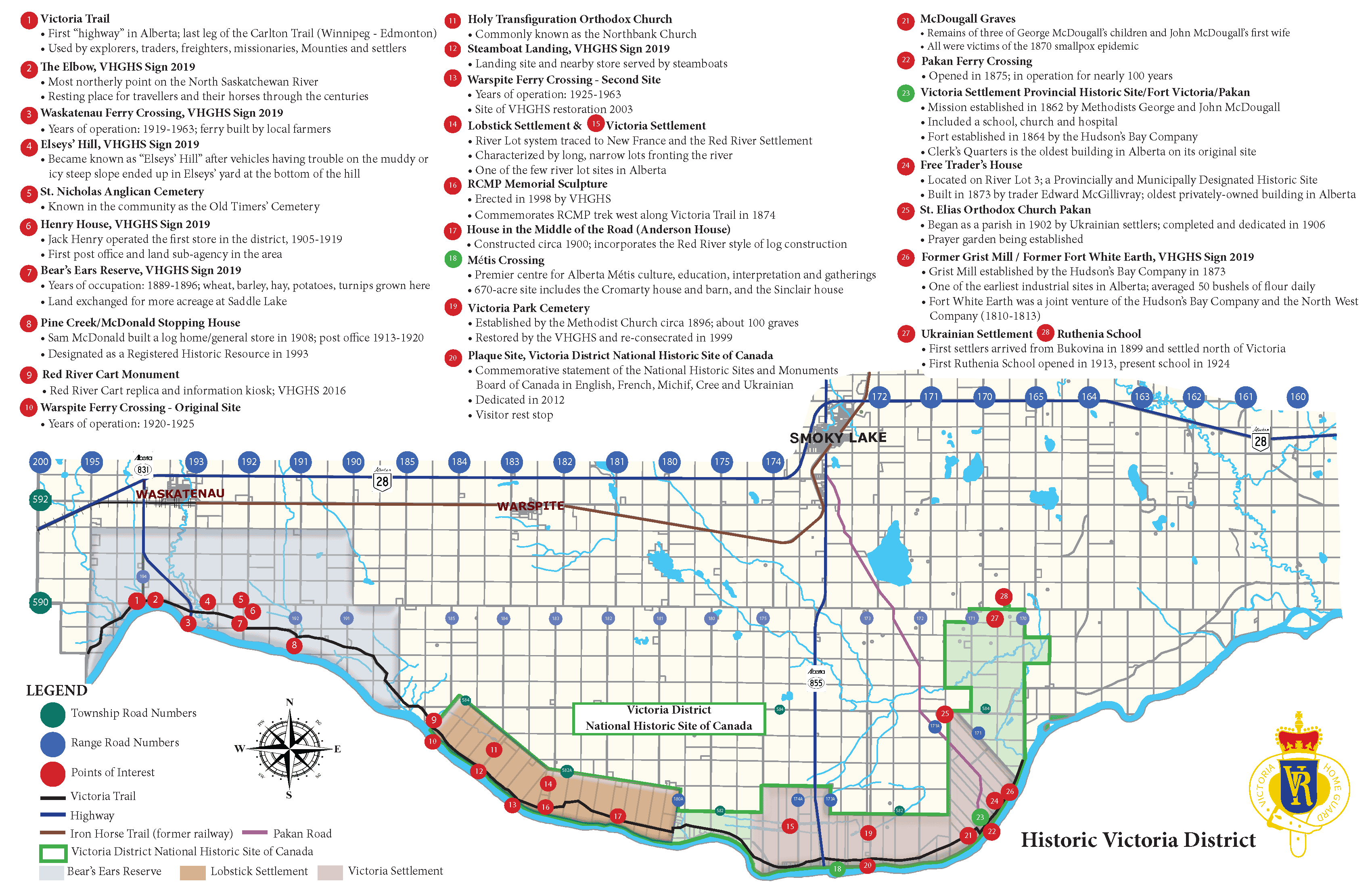
The site includes the former Lobstick Settlement to the west, Victoria Settlement—now known as Pakan—to the east, and an early Ukrainian settlement to the north. Historic farmsteads are scattered throughout the landscape, while clusters of heritage buildings mark the former McDougall’s Mission and the Ukrainian settlement.
Explore the historic landscape and discover the people, communities and cultural traditions that helped shape this important part of Alberta’s history.
Victoria Settlement Provincial Historic Site (Pakan)
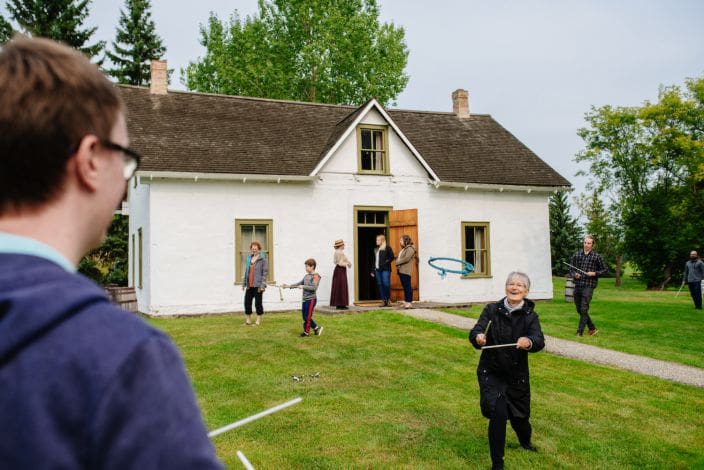 Victoria Settlement Provincial Historic Site (Pakan) lies within the Victoria District National Historic Site and lets you explore the lives of people living on this land from 1860 to 1922. Life here constantly adapted to reflect changes across the rest of Alberta.
The Free Trader’s Cabin played a significant role in Alberta’s fur-trade period and in the Victoria Settlement, where the HBC had a fur trading post, one of the earliest in Western Canada.
Victoria Trail Municipal Historic Area
Follow a historic segment of the 900-mile Carlton Trail, an important transportation route that once connected Fort Edmonton with Fort Garry (Winnipeg) via Victoria Settlement (Pakan).
Early European explorers, fur traders, Métis and settlers travelled this rugged route, with brigades of Red River carts carrying people, supplies and trade goods across the frontier. Over time, the carts’ massive wooden wheels etched deep tracks into the prairie landscape, leaving behind a remarkable reminder of the people and journeys that helped shape the region.
Today, visitors can experience a piece of this historic route and imagine what travel was like along one of Western Canada’s most important early trails.
Red River Cart Monument
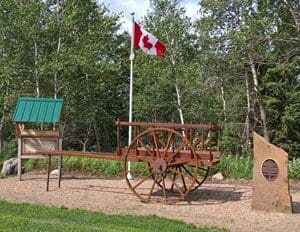 Travel the route Red River Carts first carved into the earth more than 150 years ago!
The Red River Cart monument can be found at Lobstick Settlement.
RCMP Memorial Sculpture
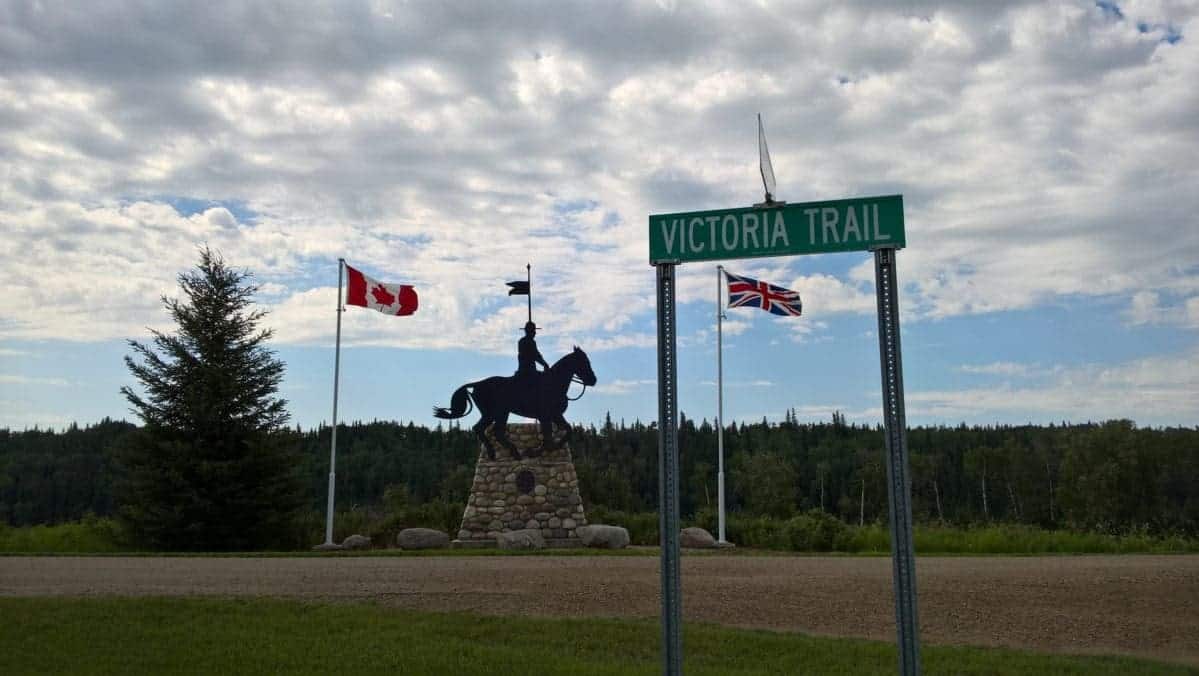 Near Waskatenau, this striking steel monument honours the original 20 members of the Northwest Mounted Police who travelled the Victoria Trail to Fort Edmonton as part of the vision for a nation-wide police force.
Standing 14.5 feet tall and 12 feet wide, the monument is crafted from one-inch-thick steel and commemorates their historic journey through the region.
Historic Ferry Crossings
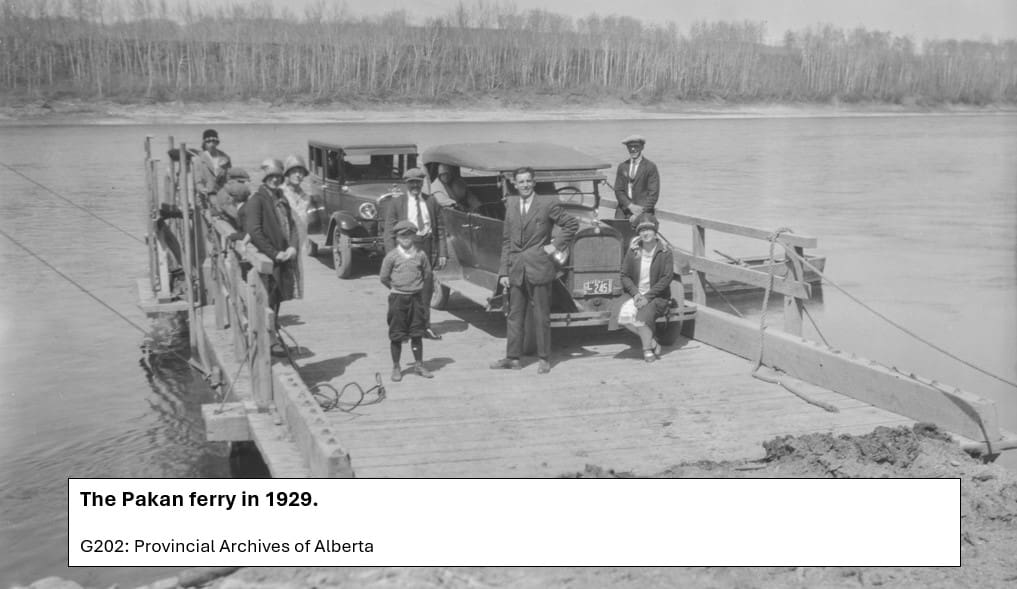 In 1892, an exciting development made river travel easier at Pakan—a cable was installed to guide the ferry across the river. The new cable ferry provided a safer, more convenient way for people, goods and travellers to reach the opposite shore.
Other historic ferry crossings include the Waskatenau Ferry, Warspite Ferry A, Warspite Ferry B, and the Desjarlais Ferry.
Juanita’s Eatery & Cafe + Heritage Corner Shoppe
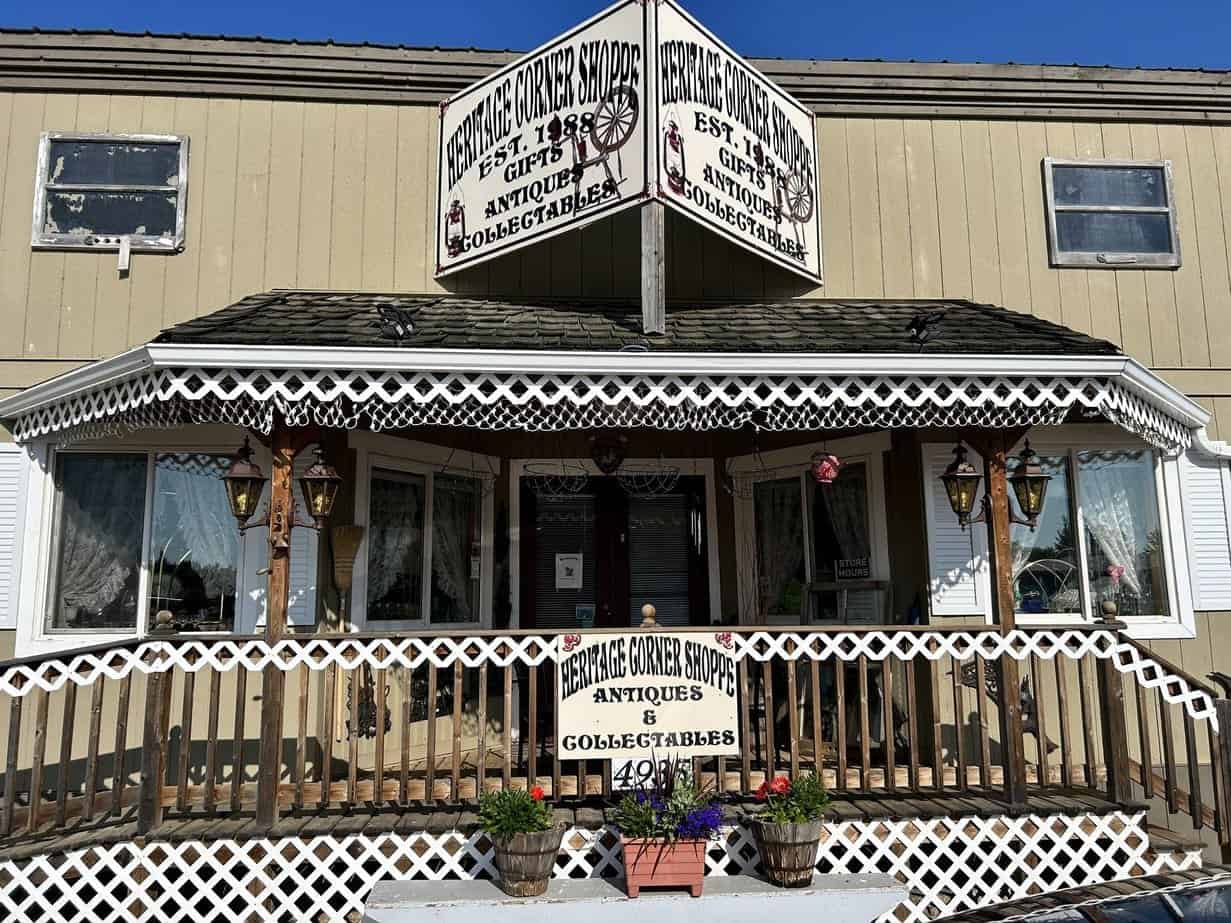 This commercial building has housed businesses which provided goods and services to the rural community for about 80 years.
The charming cafe offers hot and cold beverages, a variety of food options, and a selection of antiques and collectibles.
Chahor Church and Bell Tower
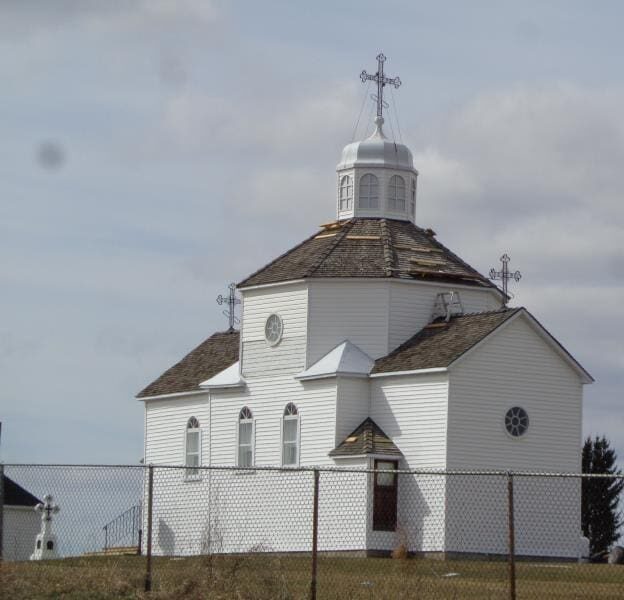 The Chahor Church and Bell Tower are significant for their association with the provincial theme of Spiritual Life.
The Church was constructed using designs and techniques brought to the area by settlers who cherished memories of their native village churches, as can be seen in the octagonal dome, the lantern, the round-wheel windows, and the metal crosses that adorn the gable roof and the central dome.
Highland Hall of Barich
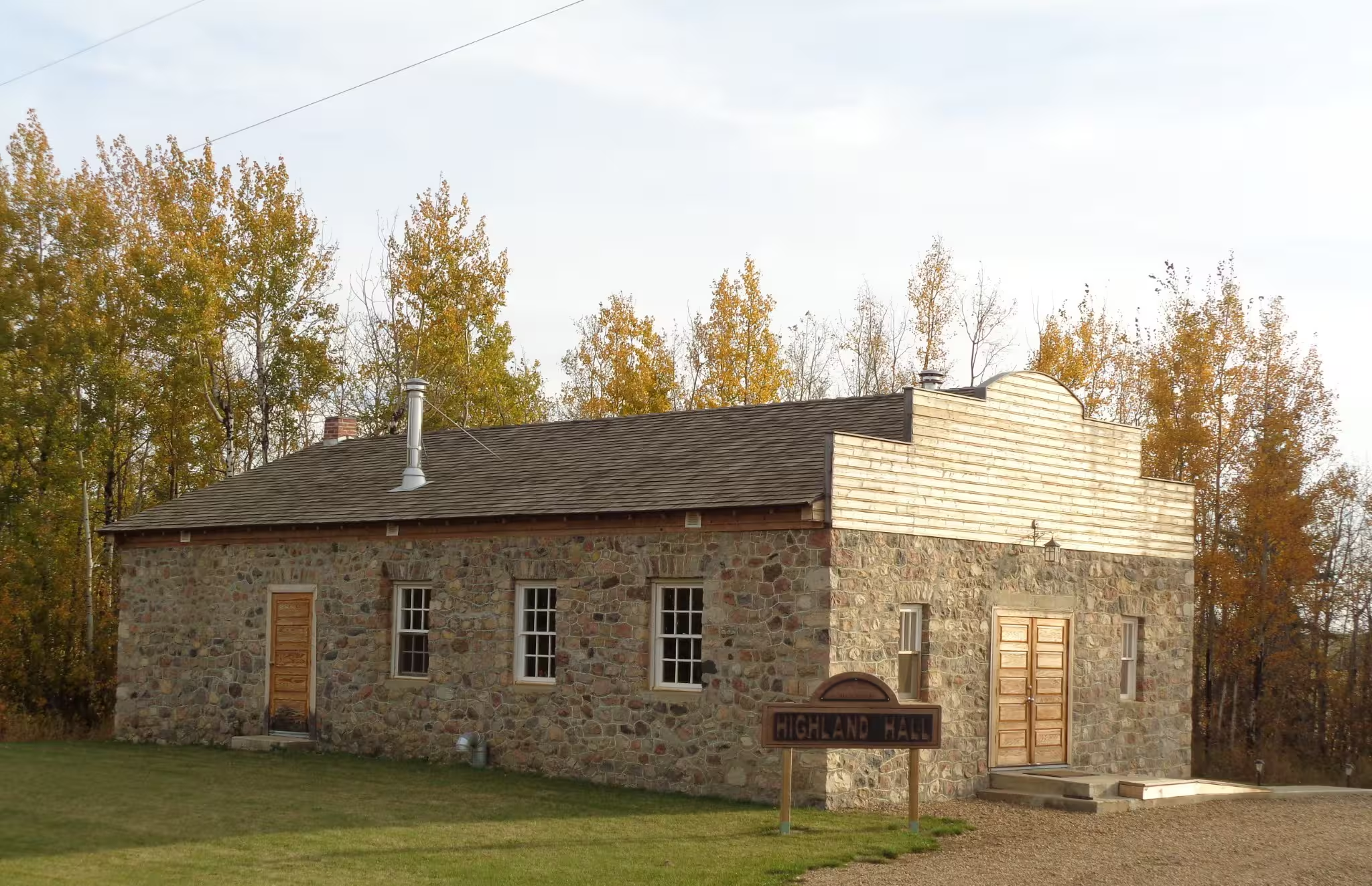 This hall, built during Alberta’s post-pioneer growth and development, features fieldstone walls to give it a unique architectural element.
It is situated in the heart of Alberta’s Ukrainian settlement, northwest of the Town of Smoky Lake.
Holy Trinity Russo Greek Orthodox Church
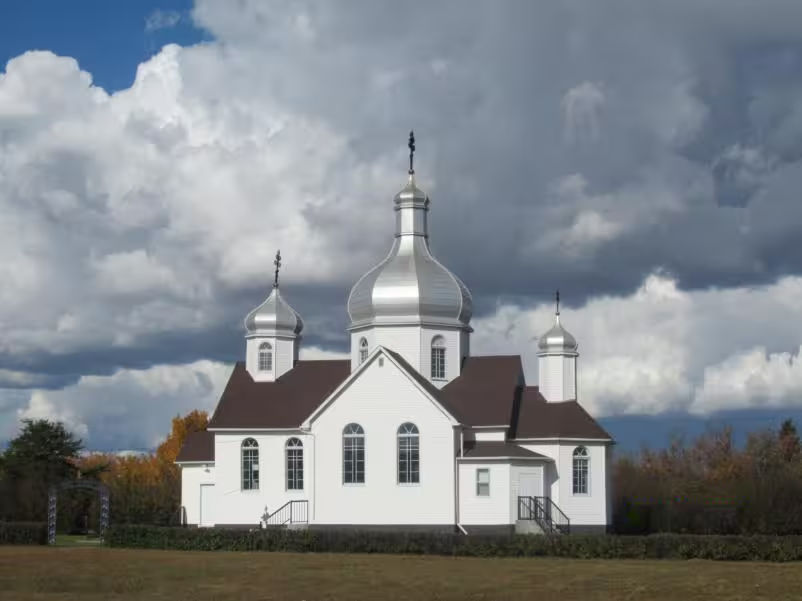 The Holy Trinity parish was one of the first institutions in Smoky Lake district.
The bell tower, built in 1916, remains complete with the original cross and the original bells.
The 1912 hand-dug well with updated concrete cribbing still serves the parish.
The S.A. MacDonald Stopping House, General Store & Pine Creek Post Office
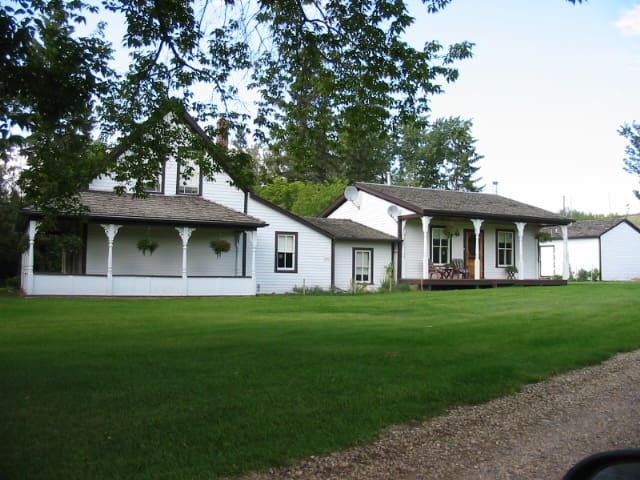 Associated with Samuel MacDonald, this historic building served as a stopping place, general store and post office along the Victoria Trail. Believed to be the area’s first general store, it became an important business and social hub for the community.
The house reflects the style of southern Ontario farmhouses, showcasing the eastern traditions early settlers brought to Alberta’s pioneer West.
St. Elias Russo Greek Orthodox Church
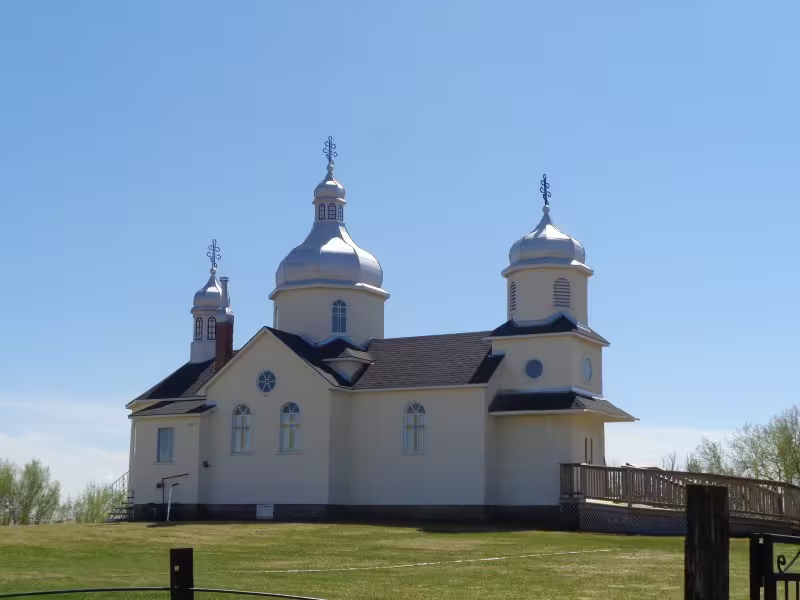 Built in 1954, this church serves descendants of immigrants from the Bukovyna region, which is now Ukraine. It reflects the enduring religious and cultural traditions of the Pakan District’s early Ukrainian settlers, whose arrival dates back to the late 1800s.
The church is part of a historic religious complex that includes the 1906 Bell House, community hall, cemetery and serenity garden.
Stry – Ukrainian Catholic Church of the Holy Euchraist
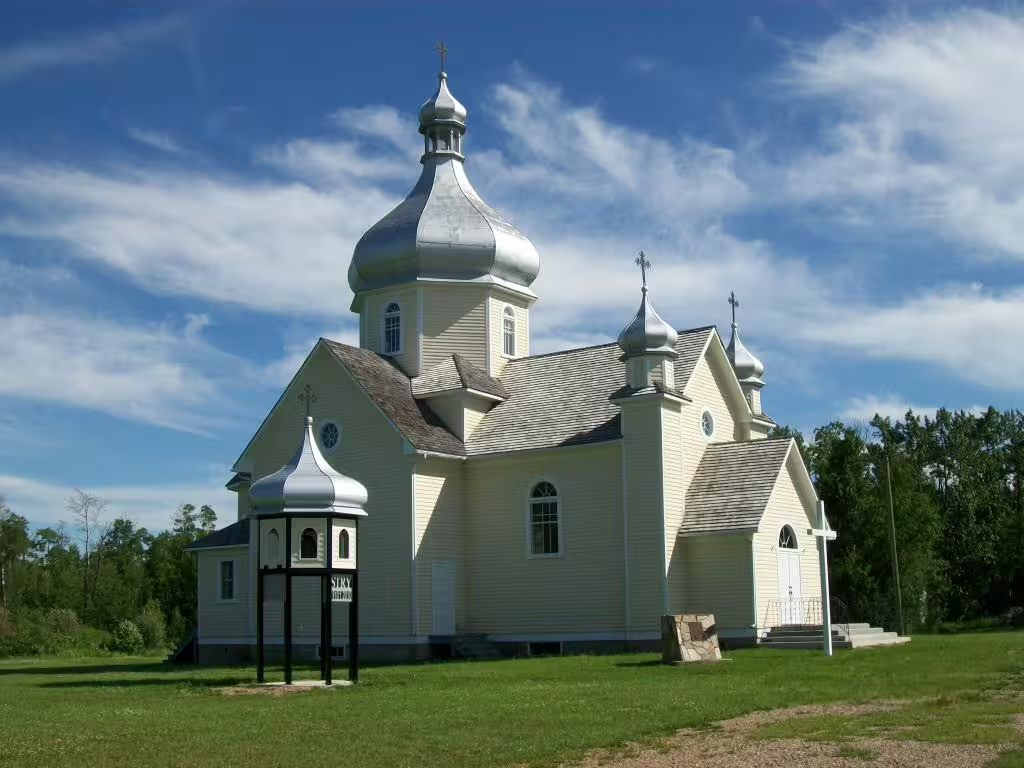 Built in the prairie Byzantine church style, Stry Ukrainian Catholic Church reflects the faith and traditions of the district’s early Ukrainian immigrants. An important gathering place for parishioners and the regional community, the church helps preserve the area’s Ukrainian-Canadian heritage and contributes to the historic collection of Ukrainian churches found throughout east-central Alberta.
Vilna Pool Hall
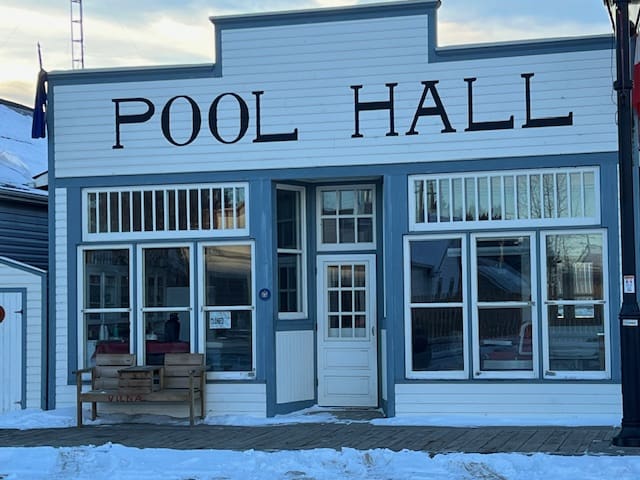
Step back in time at the Historic Vilna Pool Hall, located in a unique 1920s building on Main Street. Visit Alberta’s oldest-running pool hall and barbershop, where you can play pool or snooker on pre-World War I tables and soak up the rich local history.
Explore the attached residence on a complimentary tour for a glimpse into life in the 1930s. With its original antique pool tables, historic setting, and fascinating stories, the Historic Vilna Pool Hall is a must-visit stop.
Extend Your Adventure into Culture and History at Métis Crossing
Metis Crossing is a 512 acre site, comprised of five river lot titles that had been owned by Métis settlers in the late 1800s. It is the first and only major Metis Cultural Centre in Canada. So you can learn the rich history of the Métis.

As a leading Indigenous tourism attraction and Alberta’s first cultural destination where Métis people lead the conception, design and operation, Métis Crossing offers visitors an authentic opportunity to connect with the enduring legacy of the Métis people in the region.
The signature experiences allow visitors to immerse themselves in the culture and history of Métis people. Hands-on crafts and activities further deepen understanding with each experience.
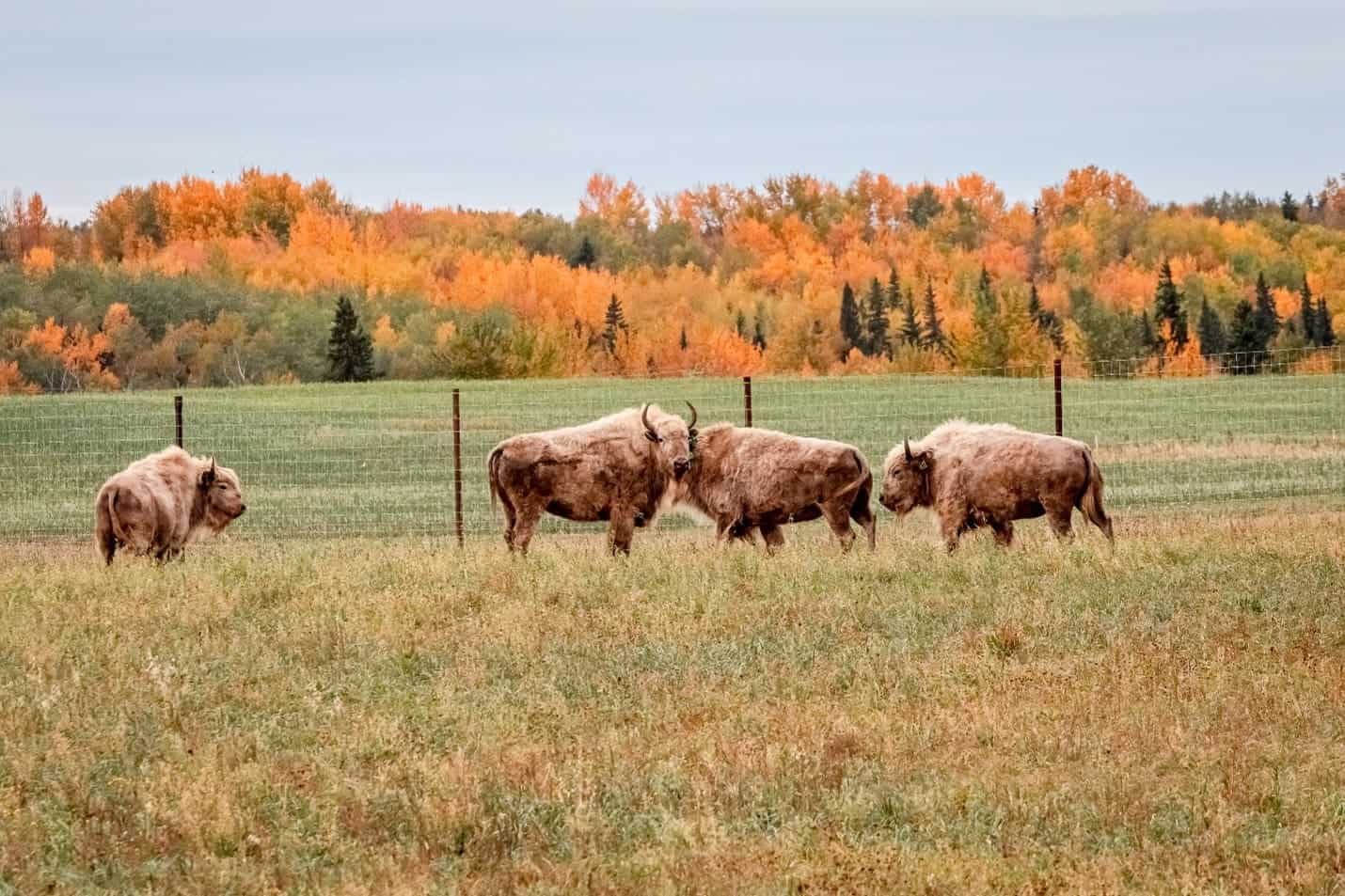

Stay at Métis Crossing
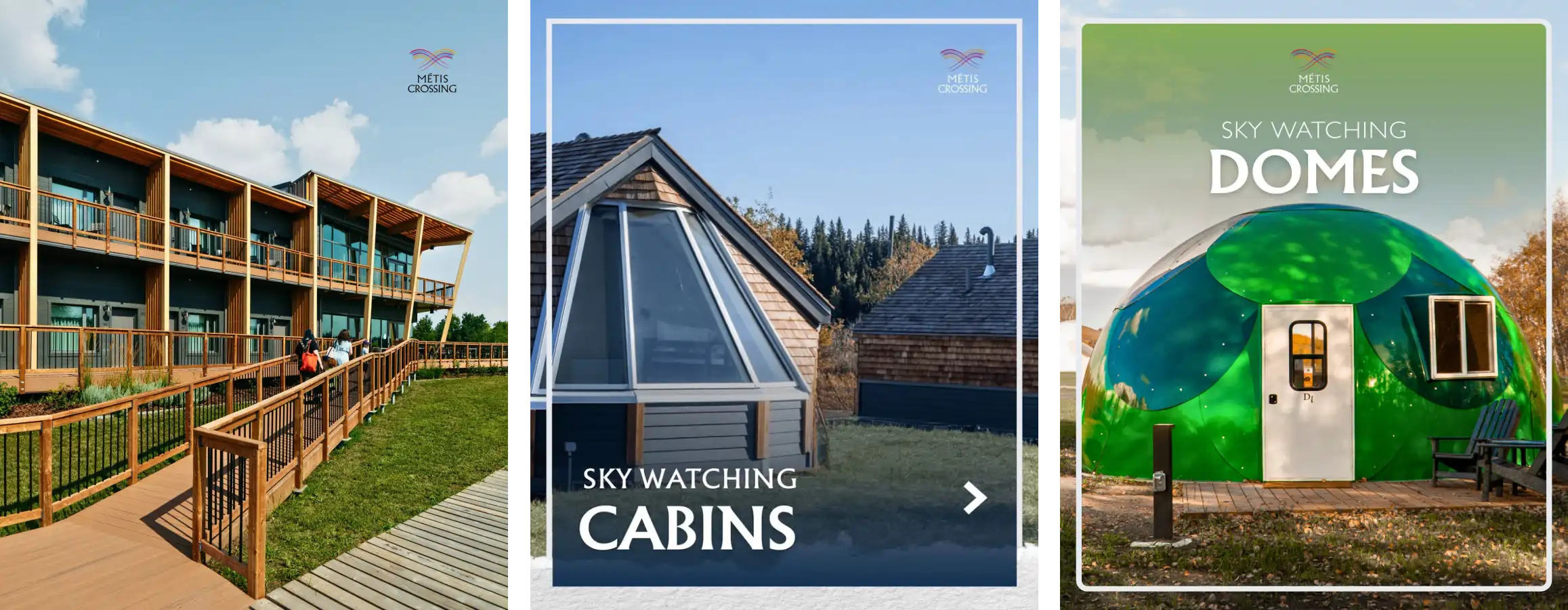
Métis Crossing has a variety of accommodation choices to suit your style. You can sleep under the stars or stay in the lodge.
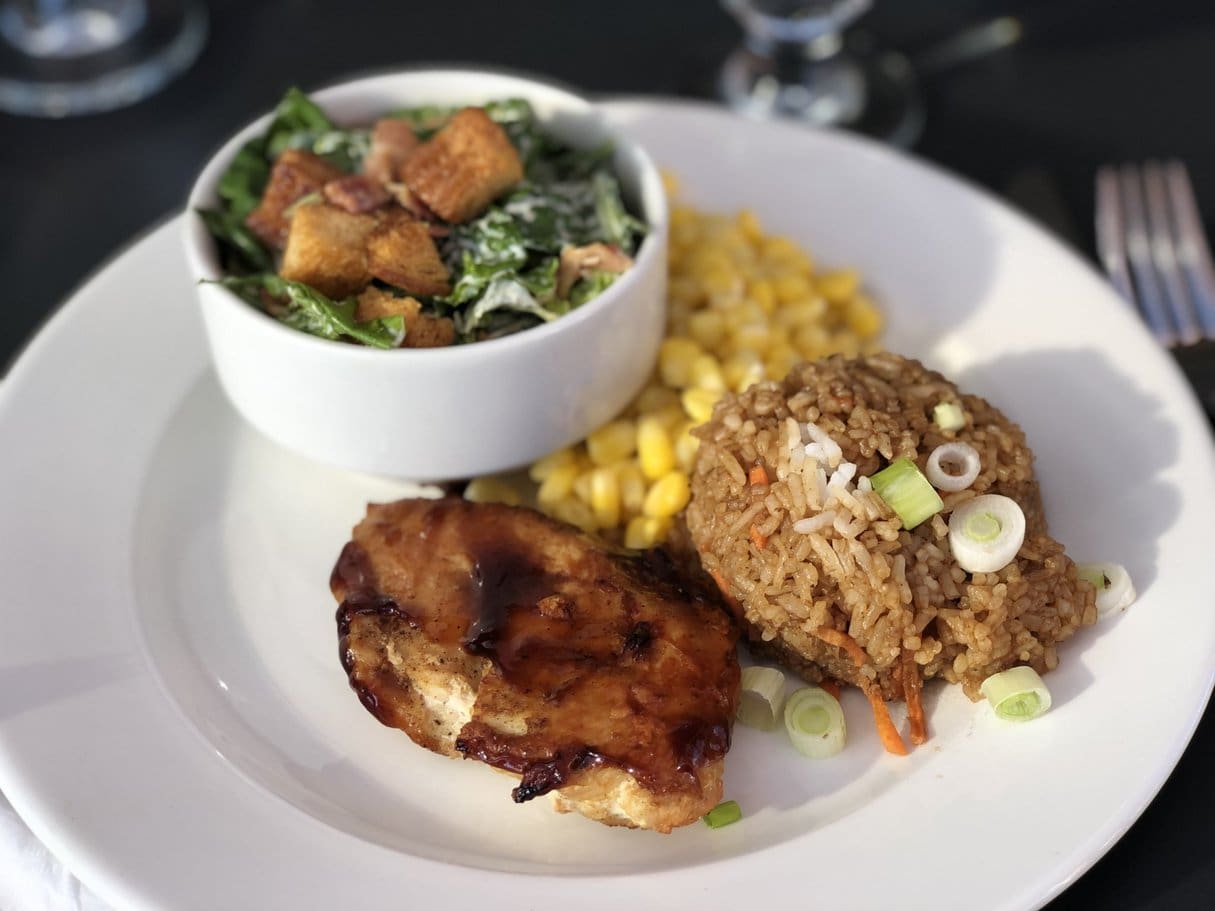
There are also great food options at Métis Crossing, including the ever-popular Sunday Brunch.
Learn more about Métis Crossing here.
Click to learn more and plan your next trip to Smoky Lake County.
